Insuring a Life in the Valley of the Sun
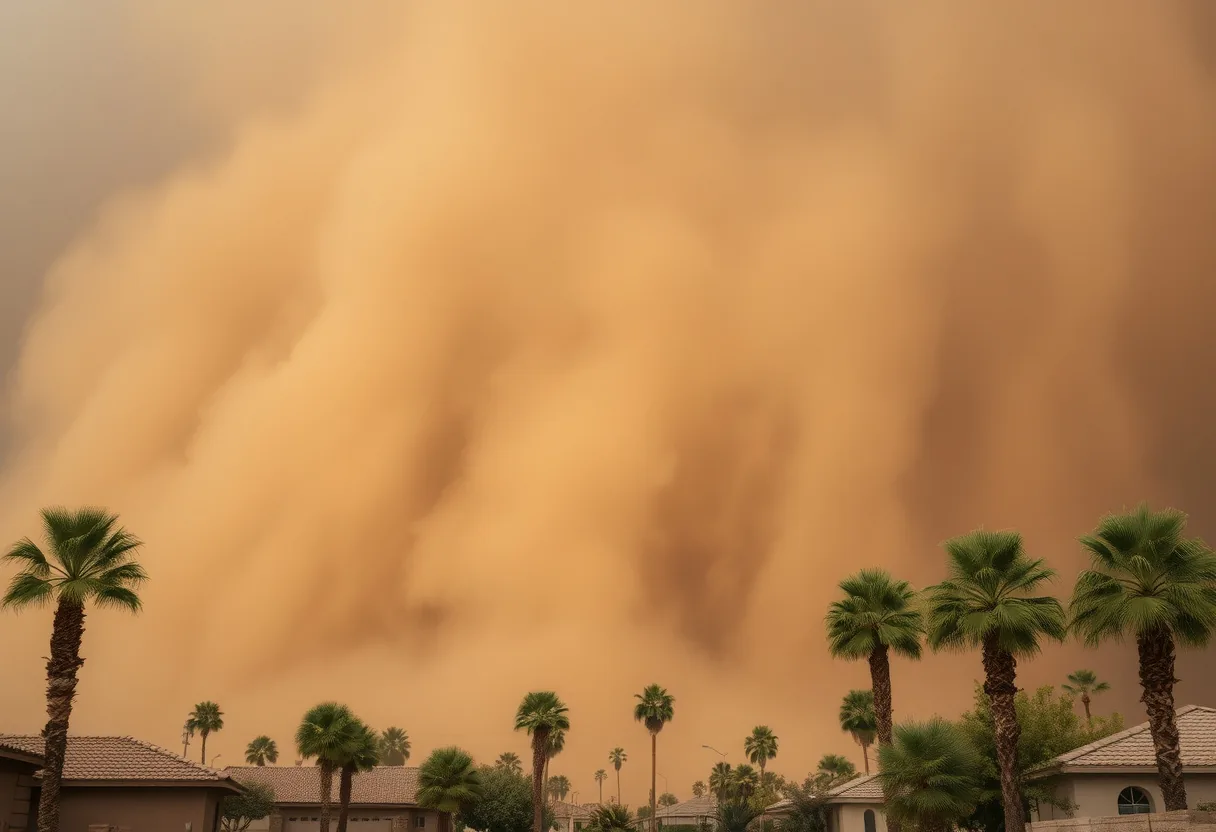
Living in Phoenix means insuring against risks most of the country never thinks about — monsoon microbursts that peel roofs off in minutes, haboob dust storms that pit windshields, triple-digit heat that ages an AC unit and a roof years in a single summer, and a wildland-urban interface where desert brush meets subdivisions. At the same time, Arizona's insurance laws set some of the lowest minimum requirements in the country, which leaves a lot of Valley households technically legal but dangerously underinsured. This guide walks through every coverage a Phoenix family typically needs, what the law actually requires, what the risks really are, and what it all costs in 2026.
A well-built personal insurance program in Phoenix usually stacks several coverages together: [auto insurance](/coverage/auto-insurance/) for the cars, [homeowners insurance](/coverage/homeowners-insurance/) or [renters insurance](/coverage/renters-insurance/) for where you live, [life insurance](/coverage/life-insurance/) to protect the people who depend on you, and often an [umbrella insurance](/coverage/umbrella-insurance/) policy to raise your liability limits across all of it. Households that own a company or side venture add [business insurance](/coverage/business-insurance/) on top. The right mix depends on what you own, who depends on you, and how much risk you can absorb yourself.
Every figure here is an estimate
Insurance is priced individually. The ranges in this guide reflect typical Phoenix-area pricing in 2026 and are meant to help you budget and sanity-check quotes — they are not a guarantee of what you personally will be charged. For a real number on your household, get a quote or call 844-967-5247.
The Coverage a Phoenix Household Actually Needs
Before the details, here is the shape of a typical personal insurance program in the Valley. Not everyone needs every line, but most established households carry more than they realize — and many carry less than they should.
| Coverage | Who it protects | Why it matters in Phoenix |
|---|---|---|
| Auto | Your vehicles and your liability on the road | Arizona minimums are low; UM/UIM and comprehensive matter here |
| Homeowners | Your house, contents, and liability | Monsoon wind and hail, haboob dust, heat, and wildfire exposure |
| Renters | Your belongings and liability in a rental | Landlord's policy covers the building, not your stuff |
| Life | The people who depend on your income | Replaces income, pays off a mortgage, funds the future |
| Umbrella | Everything above your auto and home limits | One serious lawsuit can exceed a standard liability limit |
| Business | A company, rental property, or side venture | Personal policies exclude most business activity |
The rest of this guide takes each of these in turn, starting with the two nearly every Phoenix household carries: [auto](/coverage/auto-insurance/) and [home or renters](/coverage/homeowners-insurance/) coverage.
Auto Insurance in Arizona: The 25/50/15 Trap
Arizona law requires every registered driver to carry liability insurance, and the state minimum is written as 25/50/15: $25,000 of bodily injury liability per person, $50,000 per accident, and $15,000 of property damage liability. Carry those limits and you are legal to drive in Phoenix. The problem is that legal and adequate are two very different things.
Consider what those numbers actually cover. A single overnight stay in a Phoenix-area hospital, one totaled late-model SUV, or a multi-car pileup on the I-10 can blow through 25/50/15 in an afternoon. When your liability limit runs out, the injured party can come after your personal assets — your savings, your home equity, your future wages. That is why we rarely recommend the state minimum to anyone with anything to lose.
| Coverage | Arizona minimum | Commonly recommended |
|---|---|---|
| Bodily injury liability (per person) | $25,000 | $100,000 |
| Bodily injury liability (per accident) | $50,000 | $300,000 |
| Property damage liability | $15,000 | $100,000 |
| Uninsured/underinsured motorist | Not required | Match your liability |
| Comprehensive | Not required | Recommended (monsoon/hail/glass) |
| Collision | Not required | Recommended if financed or newer |
Uninsured drivers are a Phoenix problem
Arizona consistently ranks among the states with the highest share of uninsured drivers — often estimated near or above one in eight. If a driver with no insurance hits you, your own uninsured/underinsured motorist (UM/UIM) coverage is what pays your medical bills and repairs. It is inexpensive relative to its value, and in a state with this many uninsured drivers, skipping it is a real gamble.
Two more Phoenix-specific auto notes. First, comprehensive coverage is optional under Arizona law but genuinely valuable here: it pays for monsoon hail dents, dust-storm windshield damage, flooding, theft, and cracked glass — none of which are covered by liability-only policies. Second, if you have had a DUI, a serious violation, or a lapse, Arizona may require an SR-22 certificate to reinstate your license; our [Arizona auto insurance and SR-22 guide](/blog/arizona-auto-insurance-requirements-sr22/) walks through exactly how that works and what it costs.
Homeowners Insurance in Phoenix: Built for the Desert
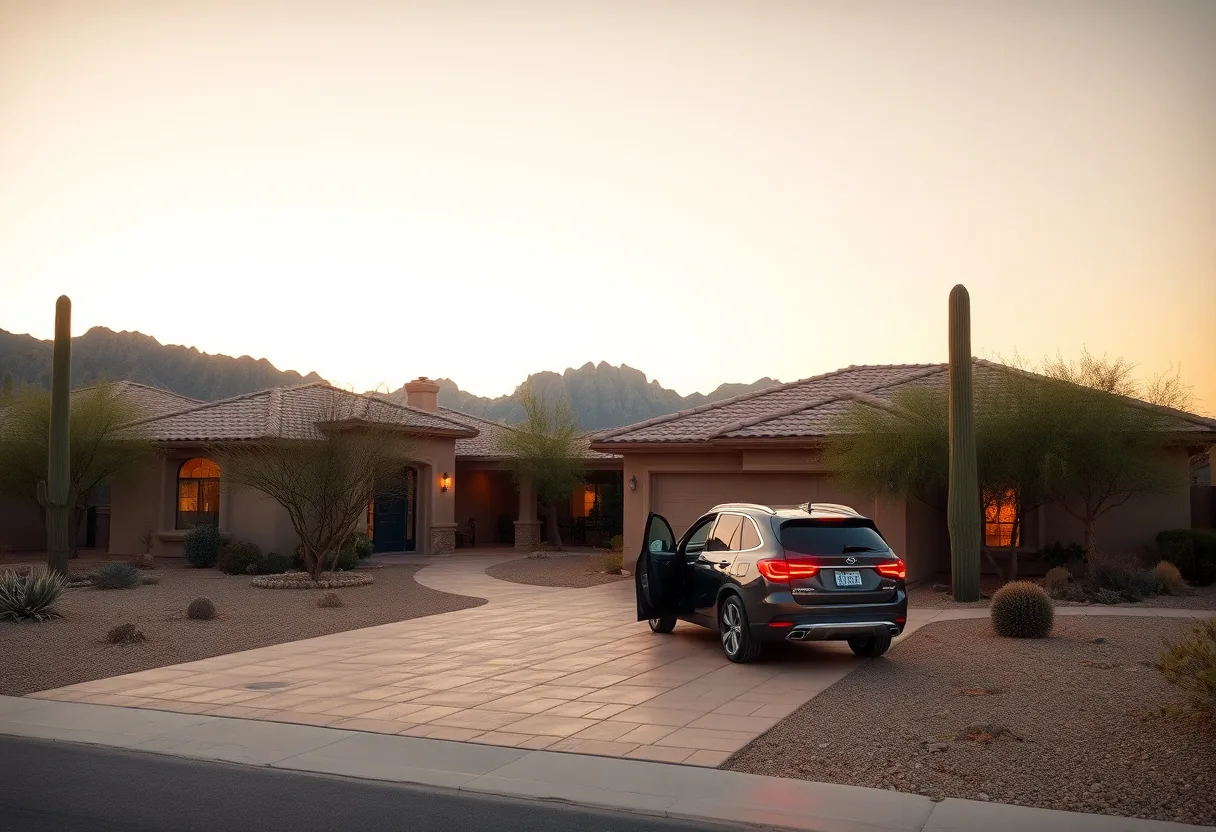
A Phoenix home faces a genuinely unusual mix of perils, and a good [homeowners policy](/coverage/homeowners-insurance/) has to answer all of them. The desert is not a low-risk environment for property — it is a different-risk environment, and the standard national policy template does not always fit it cleanly.
- Monsoon wind, microbursts, and hail — from roughly June through September, the Valley's monsoon season brings violent downbursts that can lift shingles and tiles, snap trees onto roofs, and drive hail. Wind and hail damage are typically covered, but many Arizona policies apply a separate, higher wind/hail deductible you should know about before a storm.
- Haboob dust storms — walls of blown dust can drive grit into attic vents, HVAC systems, and pool equipment, and the same storms carry the wind that does structural damage. Sudden, accidental dust intrusion may be covered; gradual infiltration usually is not.
- Extreme heat — Phoenix summers punish roofs and air conditioners. Heat itself is treated as wear and tear and is not a covered peril, so an aging roof or a failing AC compressor is a maintenance issue, not a claim. That makes roof age one of the biggest factors in both your premium and your coverage eligibility.
- Wildfire in the wildland-urban interface — homes near the desert preserves, foothills, and brush lines on the Valley's edges sit in a real wildfire-exposure zone. Fire is a standard covered peril, but properties in higher-risk areas can see higher premiums or stricter underwriting.
- Flood is not covered — this is the single most misunderstood point in Arizona. A standard homeowners policy does not cover flood, including monsoon flash flooding and wash overflow. Flood coverage is a separate policy, and in a region where dry washes turn into torrents in minutes, it is worth a serious look even outside a mapped flood zone.
- Backyard pool liability — a huge share of Phoenix homes have a pool, and a pool is an 'attractive nuisance' that raises your liability exposure. Adequate liability limits (and often an umbrella) matter more when there is water in the backyard.
Flood and wind/hail are the two gaps that surprise people
Two things catch Phoenix homeowners off guard after a monsoon: flood damage is excluded from a standard policy entirely, and wind/hail losses often carry a separate, larger deductible. Our [Phoenix home insurance monsoon and wildfire guide](/blog/phoenix-home-insurance-monsoon-wildfire/) breaks down exactly how these work and how to close the gaps before storm season.
Renters Insurance: Small Premium, Real Protection
If you rent an apartment, condo, or house anywhere in the Valley, your landlord's insurance covers the building — not a single thing you own inside it. A monsoon roof leak, a burst pipe, a fire, or a break-in can wipe out your furniture, electronics, and clothing, and without [renters insurance](/coverage/renters-insurance/) that loss is entirely yours to absorb.
Renters insurance is one of the best values in all of personal insurance. For a modest monthly premium it covers your personal property, provides personal liability protection if someone is hurt in your unit or you accidentally damage someone else's property, and pays for additional living expenses — a hotel and meals — if your rental becomes uninhabitable after a covered loss. Many Phoenix landlords now require it, and bundling it with your auto policy often makes it nearly free after the discount.
Life Insurance: Protecting Who Depends on You
Property coverage protects your stuff; [life insurance](/coverage/life-insurance/) protects your people. If someone depends on your income — a spouse, children, a co-signed mortgage, aging parents — life insurance replaces that income and keeps their plans intact if you are not there to provide it. In a metro where a mortgage and the cost of raising a family keep climbing, it is a foundational piece most households underweight.
For most families, term life insurance does the heavy lifting: it covers a set period (commonly 10, 20, or 30 years) that lines up with the years your income matters most — while the mortgage is being paid and the kids are at home — at the lowest cost per dollar of coverage. Permanent policies (whole and universal life) cost more but build cash value and never expire; they fit specific estate, business-succession, and lifelong-dependent situations. The right structure depends on your goals, and it is worth talking through rather than guessing.
Umbrella Insurance: Raising the Ceiling on Everything
Your auto and home policies each cap out at a liability limit, and in a serious lawsuit that ceiling can be lower than you think. [Umbrella insurance](/coverage/umbrella-insurance/) sits on top of both, adding a layer of liability protection — commonly $1 million or more — that kicks in when a claim exhausts the underlying policy. If a monsoon-season crash, a pool accident, or a dog bite leads to a judgment larger than your auto or home limit, the umbrella is what stands between the plaintiff and your personal assets.
Umbrella coverage is surprisingly affordable — often a few hundred dollars a year for a full $1 million of additional protection — because it only pays after your primary limits are used up. For Phoenix households with a home, a pool, teen drivers, rental property, or meaningful savings to protect, it is one of the highest-value dollars in the whole insurance budget.
What It All Costs in Phoenix in 2026
Here is what each core personal coverage typically runs for a Phoenix-area household in 2026. Treat these as planning ranges, not quotes — your actual price depends on the specifics covered in the next section.
| Coverage | Typical Phoenix cost (2026) | How it is priced |
|---|---|---|
| Auto (per driver) | $140-$260/mo; more with teens or tickets | By driver record, vehicle, ZIP, credit, and limits |
| Homeowners | $1,600-$3,400/yr; higher near brush or with an old roof | By home value, roof age, ZIP, claims, and pool |
| Renters | $14-$28/mo | By coverage amount, deductible, and location |
| Umbrella | $200-$500/yr per $1M of limit | By underlying limits, drivers, and exposure |
| Term life | $25-$70/mo for a healthy adult | By age, health, coverage amount, and term length |
A few notes on the spread. Auto premiums swing hard on driver profile — add a teen driver to a Phoenix policy and the household cost can jump dramatically, while a clean-record adult with good credit sits at the low end. Homeowners premiums in the Valley are driven heavily by roof age (heat-worn roofs are a leading cause of non-renewal), proximity to wildfire-exposed brush, and whether there is a pool. Term life is cheapest when you buy it young and healthy, which is the strongest argument for not putting it off.
What moves a Phoenix premium
The biggest levers on your personal insurance cost in the Valley are your ZIP code, your credit-based insurance score (allowed in Arizona), your roof age and condition, your claims history, whether you have a pool, and whether there is a teen driver in the household. Several of these are within your control, and an independent agent can help you get credit for the ones that are.
How to Lower Your Phoenix Insurance Costs
You cannot move Phoenix out of the monsoon belt, but you can control a real share of your premium. These are the levers that reliably move the number down without leaving you underinsured:
- Bundle home and auto. Putting both with the same carrier is usually the single biggest discount available, often 15-25% off the combined premium. Our [Phoenix home and auto bundling guide](/blog/bundle-home-auto-insurance-phoenix/) breaks down exactly how much it can save.
- Raise your deductibles. Moving from a $500 to a $1,000 or $2,500 deductible lowers premium meaningfully — just be sure you can comfortably cover the higher amount, especially the separate wind/hail deductible after a storm.
- Shop multiple carriers through one agency. An independent agency quotes many companies at once, which matters enormously in Phoenix where carriers price roof age, wildfire zones, and ZIP codes very differently.
- Stack the discounts you have earned. Good-driver, claims-free, home-safety (monitored alarm, updated roof, water sensors), paid-in-full, and paperless discounts add up. Many go unclaimed simply because no one asked for them.
- Keep your credit and claims clean. Arizona allows credit-based insurance scoring, and a clean multi-year claims history is one of the cheapest discounts there is — small claims you could pay out of pocket often cost more in future surcharges than they return.
- Maintain and update your roof. Because heat ages roofs fast, a newer or well-documented roof can be the difference between a competitive renewal and a non-renewal notice.
The highest-leverage move for most Valley households is simply having an independent agent shop the whole market at renewal instead of auto-renewing a policy that has quietly crept up year over year.
Why Use a Local Independent Phoenix Agency
When you buy from a national 1-800 carrier or a captive agent, you get exactly one company's products and one company's price. When that carrier decides to non-renew roofs over fifteen years old or tighten up on a wildfire ZIP, you are stuck. A local independent agency works differently: we represent many carriers, so we can shop your home, auto, and umbrella across the market and place you with the company that fits your situation and budget best — and re-shop it if the market shifts.
- Choice — many carriers quoted side by side, not one company's take-it-or-leave-it rate.
- Local knowledge — we live with the same monsoon deductibles, dust storms, wildfire zones, and roof-age rules you do, and we build coverage around them.
- One point of contact — the same office handles your auto, home, umbrella, and life, and the same people help when you have a claim.
- Advocacy at renewal — when your rate jumps or a carrier pulls back, we re-market your policy instead of shrugging.
The result is coverage built around a Phoenix household's actual risks by someone you can reach — not a script read from a call center two time zones away.
Serving Phoenix and the Whole Valley
We write personal insurance for households across the greater Phoenix metro — Phoenix, Scottsdale, Mesa, Chandler, Gilbert, Tempe, and Glendale — along with the surrounding East Valley and West Valley communities. Wherever you are in the Valley of the Sun, the risks are the same monsoon, heat, dust, and wildfire exposure, and we build coverage to match your specific neighborhood and home.
Every number in this guide is a planning range — the only price that matters is the one written for your household, drivers, home, and goals. Have your vehicles, home details, and any prior claims handy and [get a quote](/quote/) — or call 844-967-5247 and talk it through with a local agent who understands Arizona's minimums, monsoon deductibles, and the difference between legal and adequate coverage. We will build the program that protects your family without paying for coverage you do not need.
Frequently Asked Questions
Arizona requires 25/50/15 liability coverage: $25,000 of bodily injury per person, $50,000 per accident, and $15,000 of property damage. Those limits make you legal to drive, but they are easily exhausted by a single hospital stay or a multi-car crash. Most Phoenix drivers are far better protected with higher limits plus uninsured motorist and comprehensive coverage.
A standard homeowners policy covers monsoon wind and hail damage, though often with a separate, higher wind/hail deductible. It does not cover flood, including monsoon flash flooding and wash overflow. Flood requires a separate policy. Given how quickly Phoenix washes flood during storm season, flood coverage is worth considering even if you are not in a mapped flood zone.
Arizona has one of the highest shares of uninsured drivers in the country, often estimated near or above one in eight. If an uninsured or underinsured driver hits you, your own UM/UIM coverage pays your medical bills and repairs when they cannot. It is inexpensive relative to its value and one of the smartest add-ons a Phoenix driver can carry.
In 2026, a typical Phoenix homeowners policy runs roughly $1,600 to $3,400 per year, with higher premiums for homes near wildfire-exposed brush, with older heat-worn roofs, or with a backyard pool. Your exact rate depends on the home's value, roof age, ZIP code, claims history, and coverage limits. An independent agency can shop several carriers to find the best fit.
Yes, if you value what you own. Your landlord's policy covers the building, not your belongings, so a monsoon leak, fire, burst pipe, or theft is your loss without renters insurance. For a small monthly premium it covers your property, provides liability protection, and pays living expenses if your rental becomes uninhabitable. Many Valley landlords now require it, and bundling makes it cheaper.
For many households, yes. Umbrella insurance adds a layer of liability protection, commonly $1 million, on top of your auto and home limits, and it is often only a few hundred dollars a year. If you have a pool, teen drivers, rental property, or savings to protect, one serious lawsuit can exceed a standard limit, and the umbrella is what shields your personal assets.
An SR-22 is not insurance itself; it is a certificate your insurer files with the state proving you carry at least the required liability coverage. Arizona may require it after a DUI, a serious violation, or a coverage lapse in order to reinstate your license. Our Arizona auto insurance and SR-22 guide explains who needs one, how long it lasts, and what it costs.
No. Every figure in this guide is a planning range based on typical 2026 Phoenix-area pricing, meant to help you budget and sanity-check quotes. Insurance is priced individually on your drivers, vehicles, home, ZIP code, credit, claims history, and coverage limits. For an accurate number, request a quote or call 844-967-5247 to speak with a local agent.