Phoenix Weather Is Harder on Homes Than It Looks
Phoenix looks calm most of the year, then summer arrives and the desert turns violent. From mid-June to late September, the North American monsoon drives sudden storms across the Valley — microbursts that peel back roofs, hail that dents everything, blowing dust that swallows neighborhoods, and flash floods that turn dry washes into rivers in minutes. Add wildfire at the desert edge and relentless heat, and the average Phoenix home faces a genuinely tough set of perils.
Most homeowners assume their policy covers all of it. Some of it, it does — but the biggest gap, flood, is where families get caught. This guide walks through each Phoenix peril, what a standard [homeowners insurance](/coverage/homeowners-insurance/) policy pays for, and how to keep a claim from turning into a crisis.
Arizona's Monsoon Season: Four Perils in One
The monsoon is not a single storm — it is a season of them, each bringing a different kind of damage. Understanding the four main threats is the first step to knowing whether you are covered.
- Microbursts and high winds — a collapsing column of storm air can hit the ground at 60 to 100 mph, tearing off shingles and tiles, launching patio furniture through windows, and toppling trees onto roofs.
- Hail — less frequent than in Colorado, but Valley hailstorms happen and can bruise roofs, crack skylights, and dent AC condenser fins and garage doors.
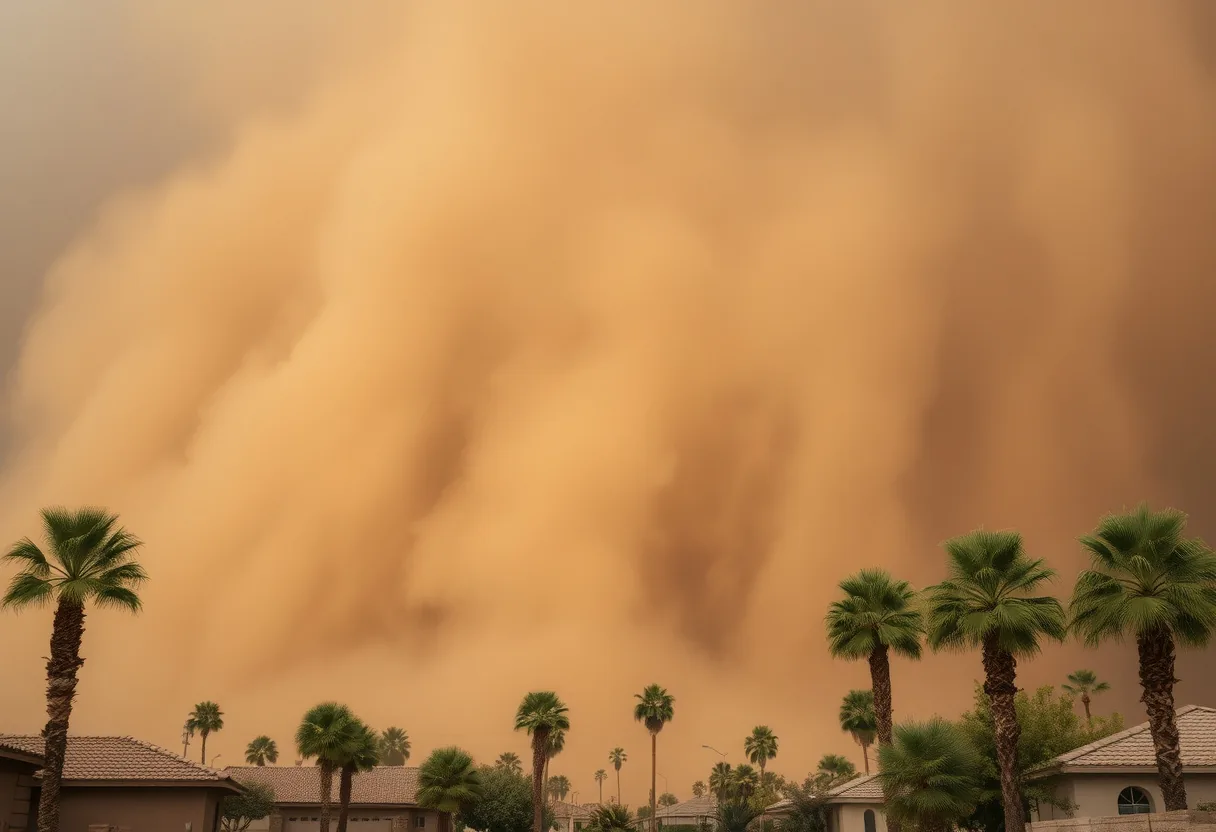
- Blowing dust and haboobs — walls of dust roll in ahead of storms, driving grit into HVAC systems, sandblasting exterior paint, and cutting visibility to near zero.
- Flash flooding — the ground sheds water instead of absorbing it, so an inch of rain in an hour sends water racing down streets, into low-lying yards, and through door thresholds.
The critical thing to notice: the first three are typically covered, but the fourth — flooding — is almost always excluded. That single distinction is the most important idea in this guide.
What Your Homeowners Policy Covers, and What It Does Not
A standard Arizona [homeowners insurance](/coverage/homeowners-insurance/) policy is built for sudden, accidental storm damage. Wind stripping shingles off your roof, a microburst throwing a branch through a window, hail denting your AC, rain pouring in through storm-created damage — those are the core covered events. What it does not cover falls into two buckets: flood and gradual wear.
Monsoon flooding needs its own policy
Rising water and flash flooding are excluded from virtually every homeowners policy. If a wash overflows or street flooding pushes water into your home, only a separate flood insurance policy responds. Flood policies generally carry a 30-day waiting period, so buying one in July when a storm is on the radar is too late — you have to be ahead of the season. Ask us whether your address sits in a FEMA flood zone and what a policy would cost.
The second surprise is how your roof claim gets paid. Many Arizona policies settle older roofs on an Actual Cash Value (ACV) basis rather than Replacement Cost Value (RCV). ACV subtracts depreciation for age and sun wear, so a 15-year-old roof cooked by desert UV might be covered for only a fraction of what a new roof costs. Under the relentless Arizona sun roofs age fast, so an ACV settlement can quietly turn a covered claim into a large out-of-pocket bill — knowing which basis your policy uses before a storm hits is essential.
Wildfire Risk at the Desert's Edge
Phoenix is not usually thought of as wildfire country, but homes along the wildland-urban interface — the north and east Valley, the foothills, and the desert edges where subdivisions meet open brush — carry real exposure. Dry desert grasses ignite fast, and wind-driven fire moves quicker than people expect. The good news: wildfire is a covered peril under standard homeowners policies, including the fire itself and smoke damage.
Coverage is only half the equation. Insurers increasingly reward — and sometimes require — defensible space around homes in higher-risk areas:
- Clear brush, dead vegetation, and debris within at least 30 feet of the structure.
- Keep gutters and roof valleys free of dry leaves and needles that catch embers.
- Use gravel or stone landscaping close to the walls instead of bark mulch.
- Trim tree limbs back from the roofline and from other trees to break the fuel path.
- Screen vents and enclose eaves to keep wind-blown embers out of the attic.
If you live on the desert edge, make sure your dwelling limit reflects today's rebuilding costs. For larger or custom foothill properties, [high-value home insurance](/coverage/high-value-home-insurance/) adds extended replacement cost and specialty features a basic policy may not.
Extreme Heat: The Slow Peril
Not every threat arrives as a storm. Phoenix summers push past 110 degrees for days on end, and that heat is hard on the two most expensive systems in your home: the roof and the HVAC. UV and heat break down shingles and dry out underlayment, shortening a roof's life and accelerating the depreciation that drives those ACV settlements. Air conditioners run near-continuously through it all.
Here is the catch: insurance covers sudden, accidental damage, not wear and tear. An AC that dies of age or a roof that simply wore out are maintenance issues, not claims. But a well-maintained roof and system keep your ACV settlement higher and are less likely to fail during a storm — in Phoenix, roof and HVAC upkeep directly affects how a future claim gets paid.
The Backyard Pool: A Liability You Can See
A huge share of Phoenix homes have a backyard pool — the best part of a desert summer, and one of the biggest liability exposures a homeowner can carry. In legal terms a pool is an attractive nuisance: something that draws children onto your property, so you can be held responsible even for an uninvited child who wanders in. A single serious incident can generate a claim far larger than the standard liability limit on a homeowners policy.
Raise your limits before you need them
Many homeowners carry only $100,000 to $300,000 of personal liability — thin protection if a pool accident leads to a lawsuit. Raising your homeowners liability limit is inexpensive, and adding an [umbrella insurance](/coverage/umbrella-insurance/) policy layers another $1 million or more of protection across your home and autos for a few hundred dollars a year. For a Phoenix household with a pool, that math is hard to argue with.
Pair higher limits with basic safety measures — a self-latching pool fence, a self-closing gate, and an alarm — and you protect both your family and your finances. Insurers view these steps favorably.
Phoenix Perils at a Glance
A quick reference for how each major Valley peril lines up against a standard homeowners policy.
| Peril | Covered by standard homeowners? | What to do |
|---|---|---|
| Monsoon wind / microburst | Yes — wind is a covered peril | Confirm roof settles at RCV, not ACV; inspect roof before June |
| Hail | Yes — sudden hail damage covered | Document roof and AC condition with dated photos each spring |
| Blowing dust / haboob | Sudden damage yes; grit and cleanup often not | Service HVAC filters; wind-driven damage to structure is covered |
| Flash flooding | No — flood is excluded | Buy a separate flood policy before season; mind the 30-day wait |
| Wildfire | Yes — fire and smoke covered | Maintain defensible space; verify dwelling limit covers rebuild |
| Extreme heat wear (roof / HVAC) | No — wear and tear excluded | Maintain systems; keeps roof value and ACV settlement higher |
| Pool liability | Yes, up to your liability limit | Raise liability limits and add an umbrella policy |
Get Ready Before the Storms Arrive
The homeowners who come through monsoon season well are the ones who prepared in spring. A few hours of documentation and maintenance now saves weeks of frustration on a claim later:
- Build a photo inventory. Photograph rooms, valuables, the roof, and outdoor equipment, and store the images in the cloud so a loss is easy to prove.
- Get a roof inspection before June. Have a licensed roofer check for loose tiles, worn shingles, and flashing issues before the first microburst finds them.
- Review your limits and settlement basis. Confirm your dwelling limit reflects current rebuild costs, whether your roof settles at ACV or RCV, and that your liability limit fits your household.
- Trim trees and secure the yard. Cut back branches over the roof and plan to tie down patio furniture when a storm warning hits.
- Check flood and umbrella coverage now. Both have gaps that only matter after it is too late to buy them — the flood waiting period and the moment a lawsuit lands.
Finally, review your coverage with an independent agent once a year, ideally before monsoon season. Home values, rebuild costs, and your circumstances change, and a yearly check keeps your policy matched to what you own and the risks you face. For the full picture of insuring a home in the Valley, see our [complete Phoenix guide](/blog/insurance-phoenix-az-complete-guide/).
Let's pressure-test your policy
Not sure whether your roof settles at ACV or RCV, or whether you need flood or umbrella coverage? That is exactly what we do. [Get a quote](/quote/) or call 844-967-5247 and we will review your Phoenix home coverage line by line — no pressure, just a clear picture of where you stand before the next storm rolls in.
Frequently Asked Questions
No. Flash flooding and rising water from monsoon storms are excluded from standard homeowners policies. You need a separate flood insurance policy to be covered. Flood policies usually carry a 30-day waiting period, so buy one well before monsoon season rather than when a storm is already on the radar.
Yes. Wind, microburst, and hail damage are covered perils under a standard Arizona homeowners policy, including a tree thrown through a window or rain that enters through storm-created damage. The key detail is whether your roof settles at replacement cost or actual cash value, which affects how much you receive.
Replacement Cost Value pays to replace your roof at today's prices. Actual Cash Value subtracts depreciation for age and wear, so an older sun-baked Phoenix roof may only be covered for a fraction of its replacement cost. Under the intense Arizona sun, roofs age fast, making the ACV-versus-RCV distinction a major out-of-pocket issue.
Yes. Wildfire, including the fire and resulting smoke damage, is a covered peril on standard homeowners policies. Homes near the desert edge or in the foothills carry higher risk, so maintain defensible space around the structure and confirm your dwelling limit reflects current rebuilding costs before fire season.
A pool is legally an attractive nuisance, so you can be liable even for an uninvited child who enters your yard. A serious incident can exceed a standard homeowners liability limit. Raising your limit and adding an umbrella policy layers another million dollars or more of protection for a few hundred dollars a year.
At least once a year, ideally before monsoon season in the spring. Rebuild costs, home values, and your own circumstances change over time, and a yearly review with an independent agent keeps your limits, roof settlement basis, and liability coverage matched to what you own and the risks the Valley presents.